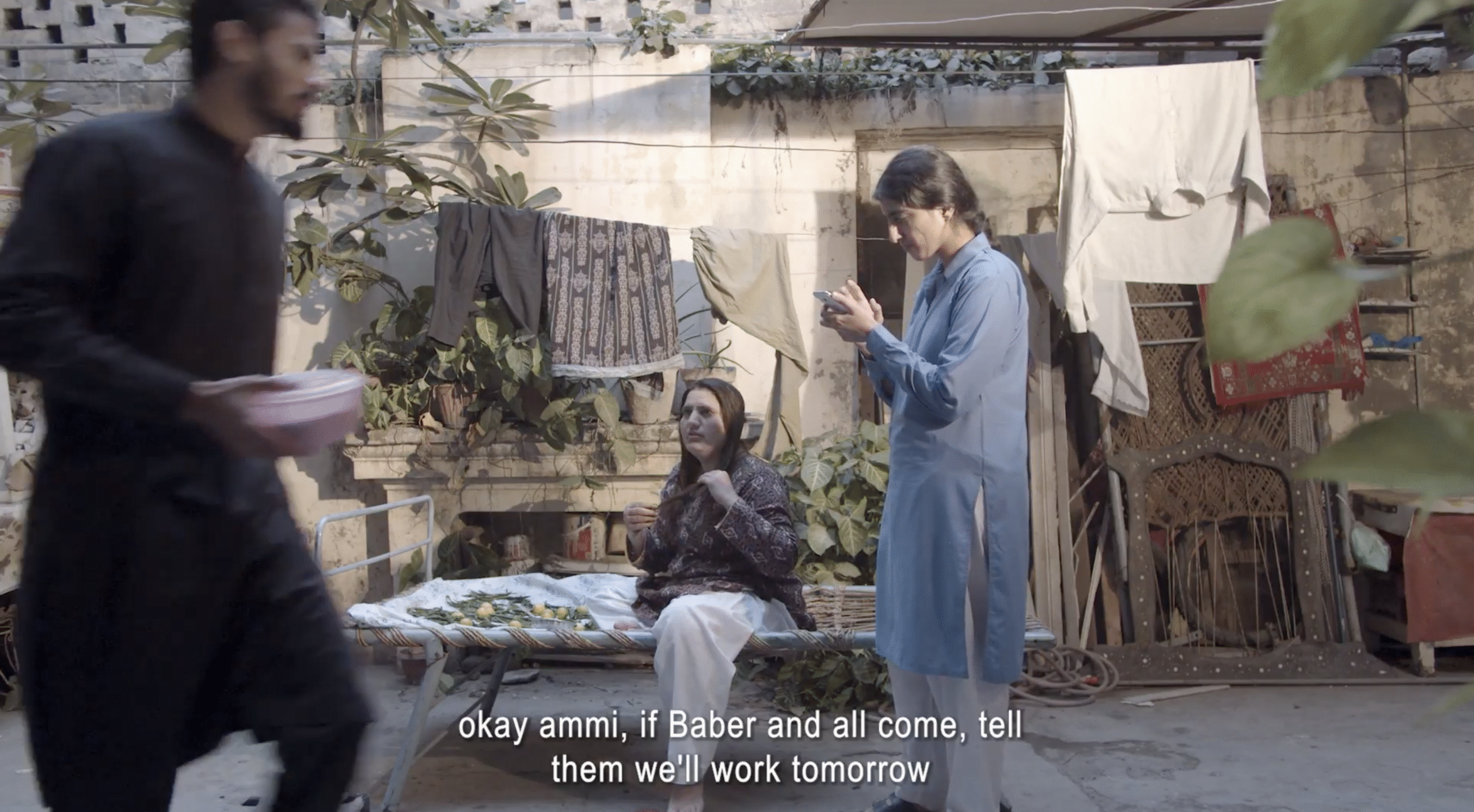
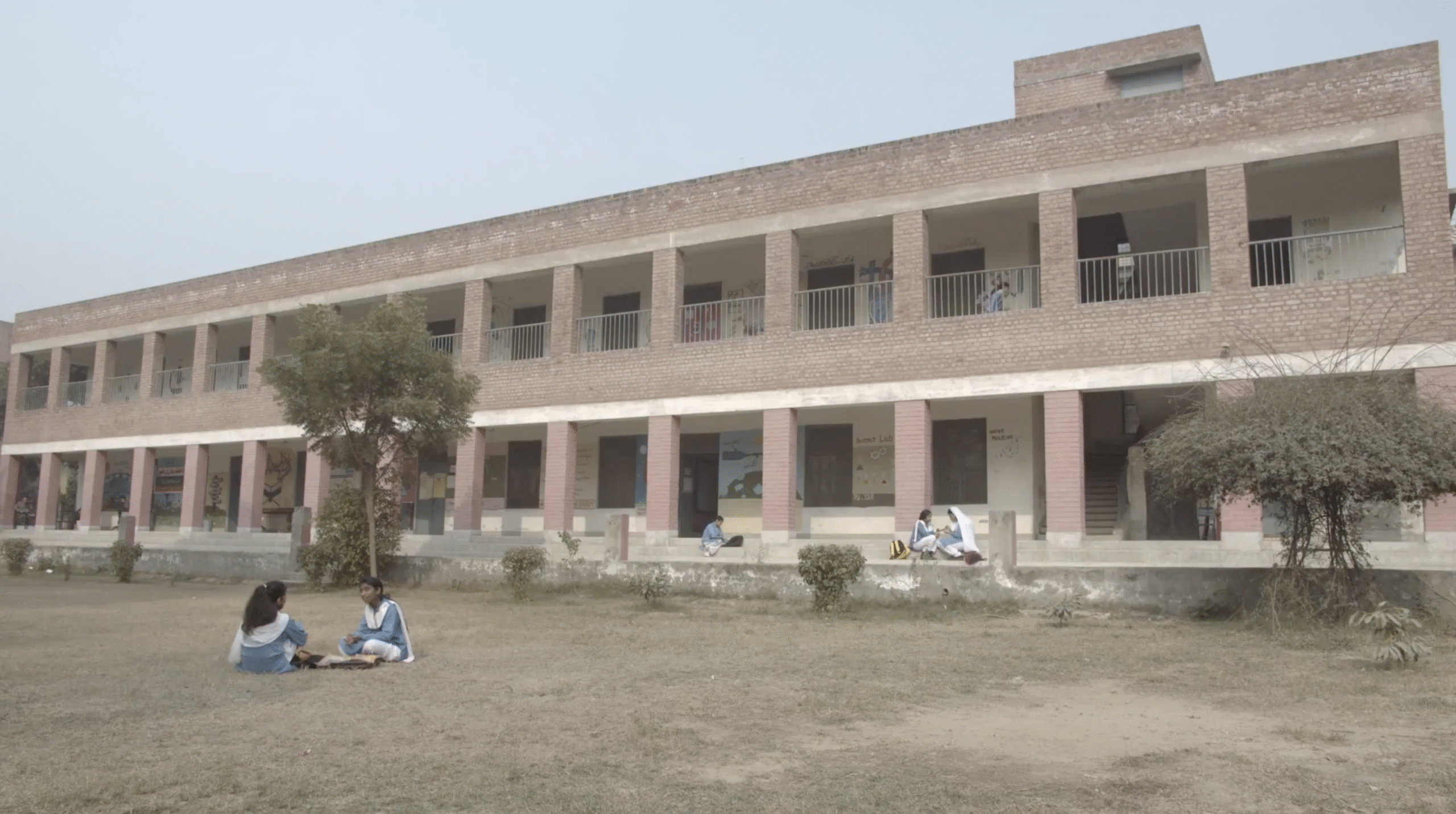
Zarda, a 2022 Pakistani short film directed by Zainab Hassan, tells the story of a teenager, Shella, as she searches her way out of the rigid social structure at home. At school, Shella charges for doing mehndi (henna) designs for her schoolmate. At home, she speaks to her mother in Punjabi and is scolded for not covering her hair fully. In seeing that she eats her roti with a side of achaar (spicy pickles) out of her mother’s view, it becomes clear that the earned money she used to buy it is a secret. While Shella doesn’t disclose the reason for leaving the house at what seems like an unexplained impulse to leave, her purpose for doing so is intentional. It turns out that Shella does not just freelance while waiting for the bus after school, but she has a job at a salon (where she speaks Urdu).
From "Zarda" directed by Zainab Hassan.
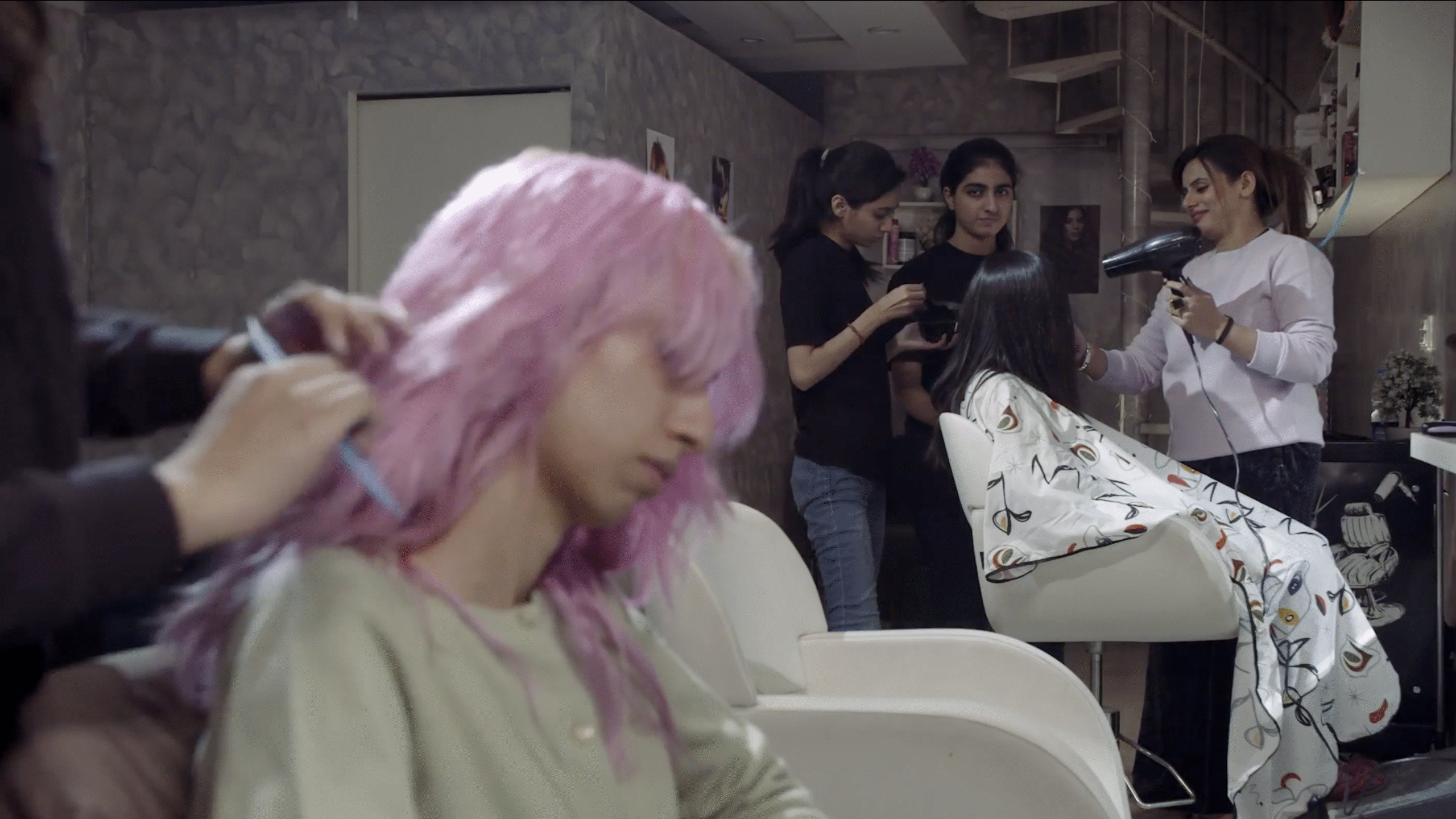
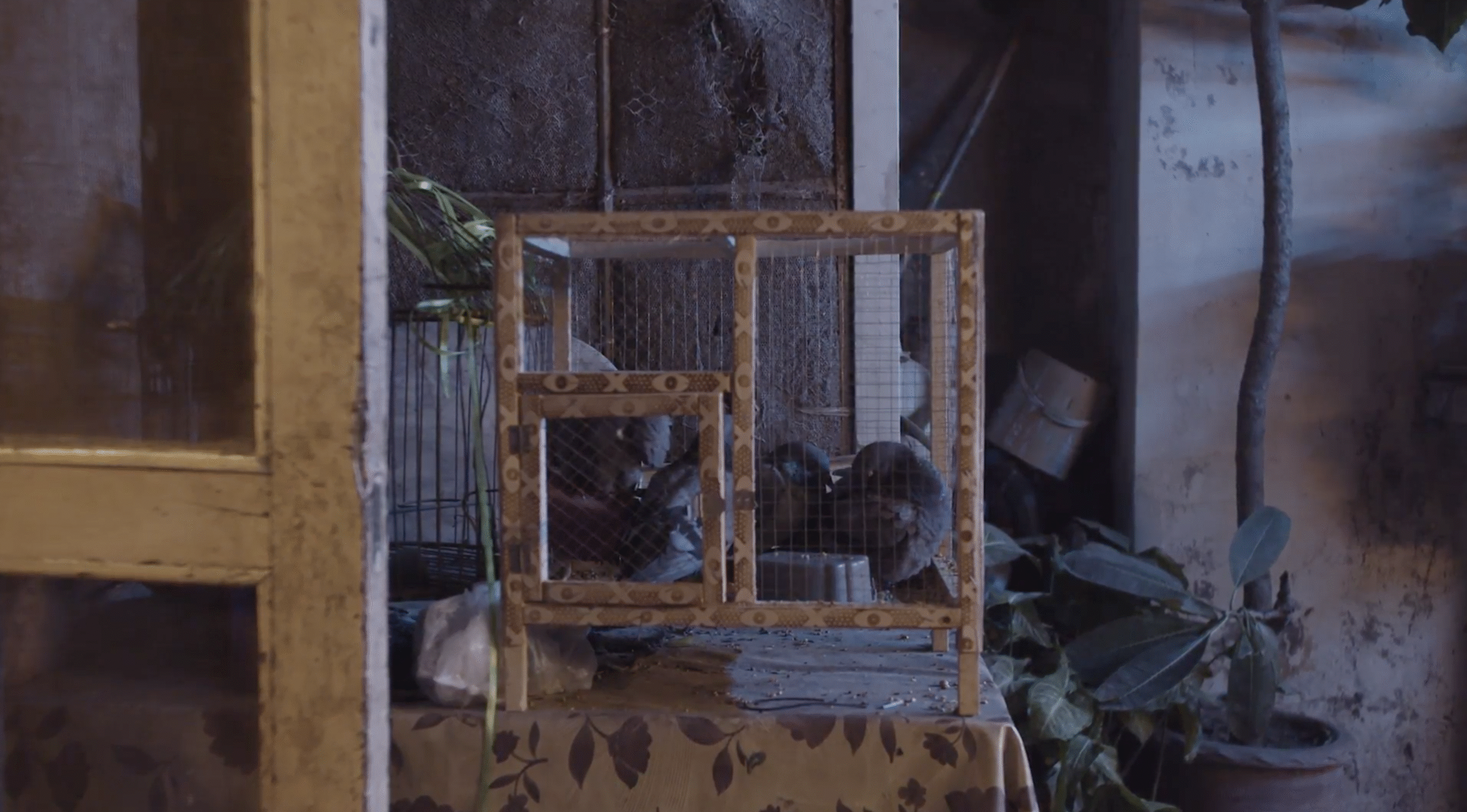
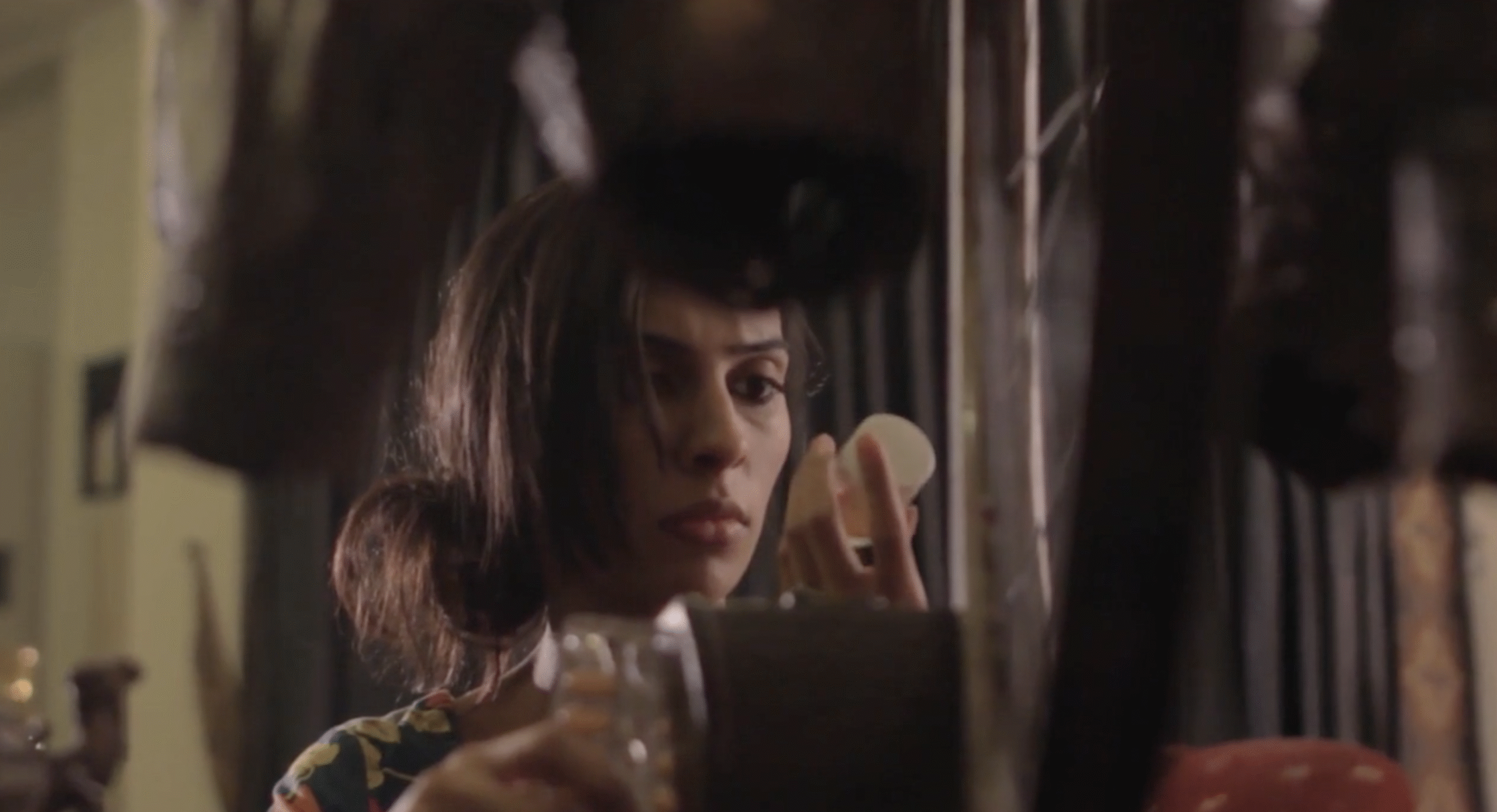
In her time as a trainee, she sees an acquaintance, Nadia, dying her hair pink. Upset at her mother for using mehndi for coloring her hair instead of dyeing it, Shella shows a post with Nadia’s pink hair. Shiela’s mother comments on the irony of the girl’s parents appearing pious while letting their daughter dye her hair. Meanwhile, Shella’s boss gives Shella the opportunity to dye her hair as part of a training. The dye color remains undisclosed, but upon seeing how her family dynamics insist a type of conservative femininity, Shella pursues the dye. She covers her hair fully at home and lets out the birds her brother keeps ill-fed in a small cage.
From "Zarda" directed by Zainab Hassan.
The film is named after a sweet rice dish which is colored with a dye. Shella’s mother gifts this to her married daughter, Saadia, who suffers from domestic abuse. Shella’s mother describes the marriage as having been arranged without pushback, while Shella says it was against the Saadia’s will. Shella’s mother mentions, “what were we supposed to do?” perhaps suggesting they could no longer afford to keep supporting Saadia. If so, this implies that there is no other next step, such as a career, for a woman besides marriage.
Maria Akram Lashari as Shella in "Zarda"
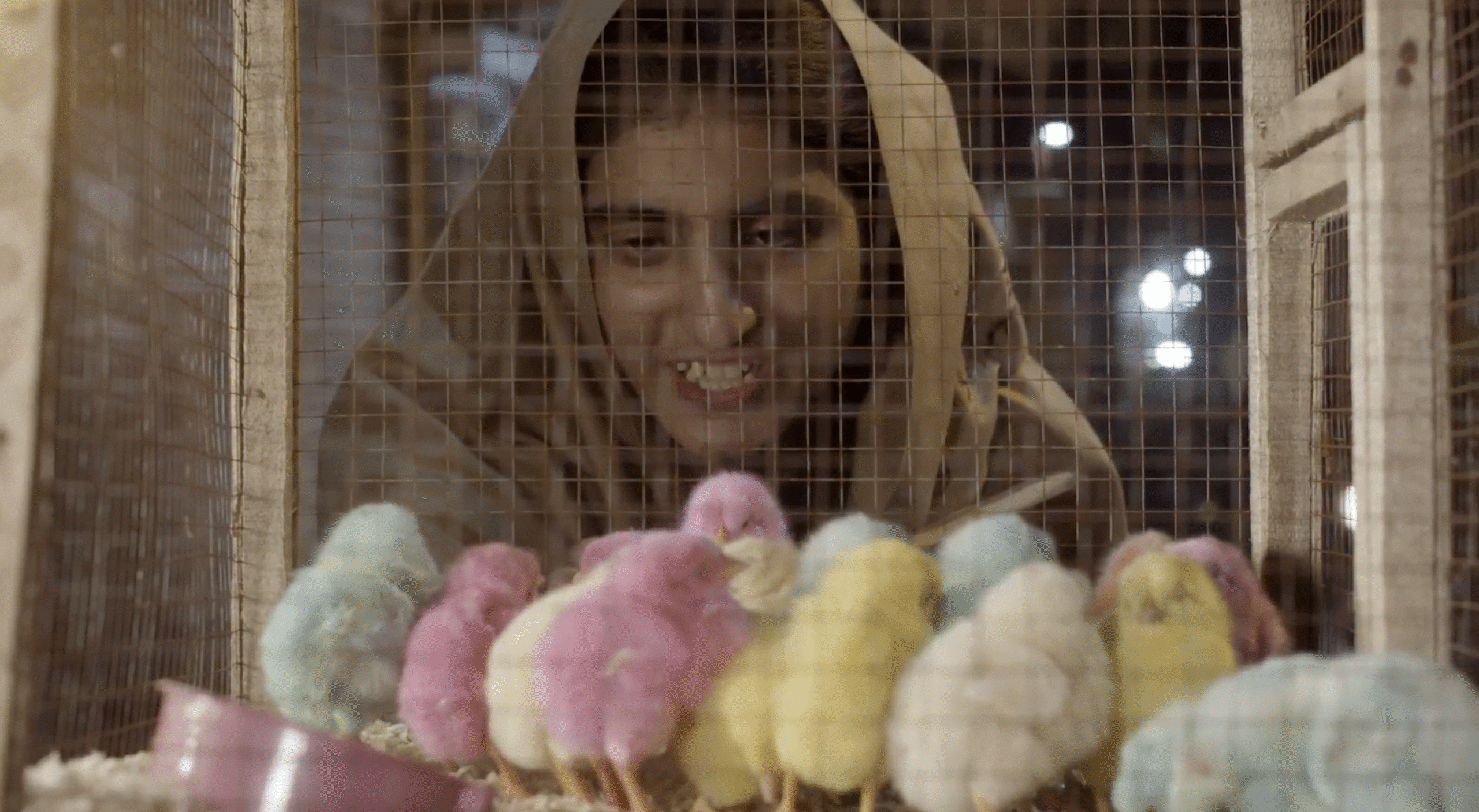
The argument on this following another news of the Saadia’s abuse is the catalyst for Shella dying her hair. “Zarda” does not actually show zarda, which has a yellow dye, just the pink container meant for Saadia. The other dye shown is of chicks whose fur has been dyed pink and blue. Shiela sees these chicks in the bazaar on her way home as she contemplates her decision on dyeing her hair. Also seeing herself as stuck in a cage in this neighborhood, Shella receives some poetic confirmation about what is possible for her.
From "Zarda" directed by Zainab Hassan.
Touching on themes of classism through language, traditional vs. modern beauty customs, and economic status impacting gender roles, “Zarda” is a layered portrait of Pakistan today.
From "Zarda" directed by Zainab Hassan.
*Parda is a veil or curtain. “Parda kar” (not spoken in the film) means to wear a scarf or hijab. “Parda” also refers to the curtain dividing the bride and groom during the nikkah (Islamic wedding ceremony) before signing the marriage contract. Because of the latter, “parda” can loosely imply marriage in some circumstances.

Leave a comment